
Emergency Roof Tarping in the USA
Grand Island Roofing Solutions responds to storm events by installing temporary tarps that cover openings created by wind uplift or hail impact. Our technicians select reinforced polyethylene sheets sized to overlap damaged zones by at least four feet on every side. They fasten the material with wood battens and screws driven into sound decking so gusts cannot pull the covering loose.
Before any tarp is placed our crews walk the roof to locate every point where water can enter. They mark penetrations around vent boots, ridge caps and shingle tears, then measure total square footage to determine how many sheets and fasteners are required. This step prevents gaps that would allow rain to reach insulation or ceilings. Water entry points around flashing require attention from Grand Island Roofing Solutions during emergency roof tarping across the USA.
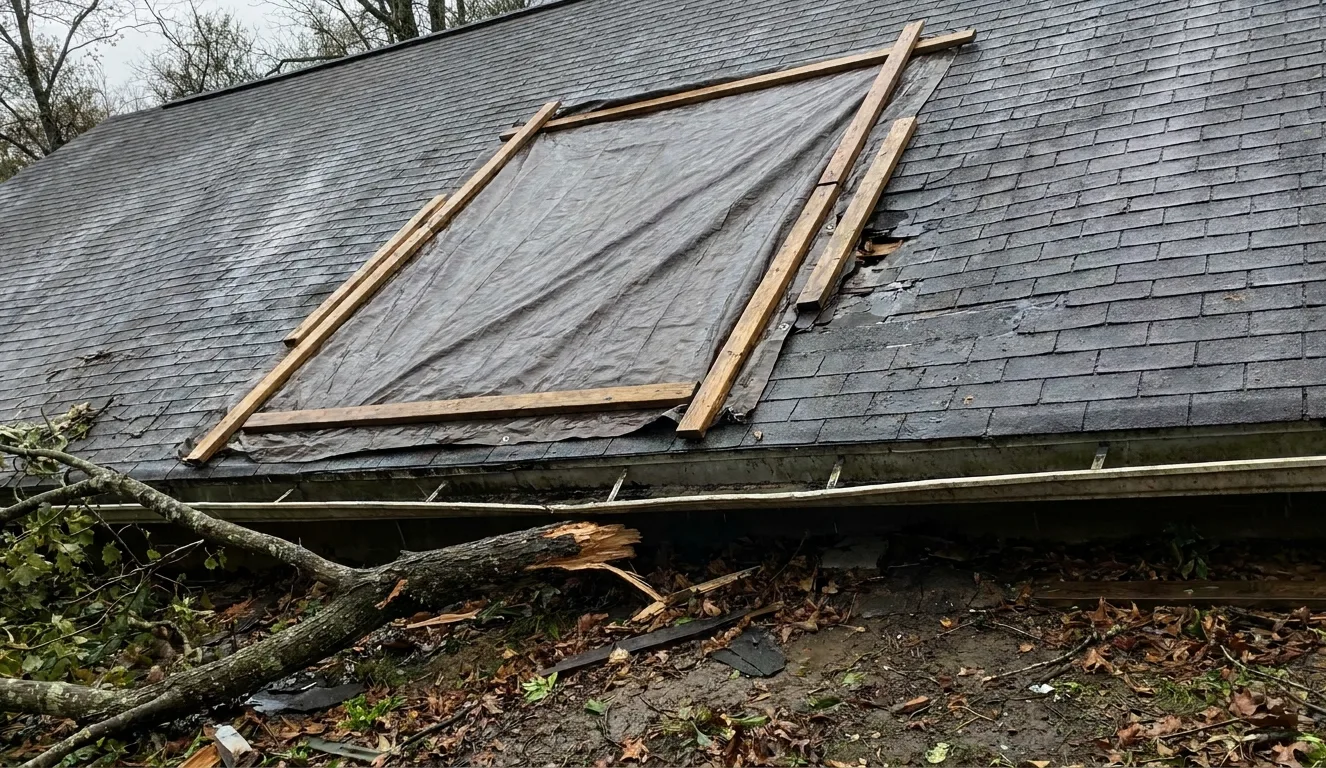
Visible Indicators After High Winds or Hail
- Shingles lifted along eaves or ridges showing exposed felt
- Dark streaks of water running down interior walls near roof joints
- Granule loss leaving bald patches where impact occurred
- Daylight visible through attic sheathing at nail holes
- Drip marks on ceiling drywall directly below valley lines
How Wind and Hail Create Openings
High winds bend shingles upward and crease them along the leading edge so the sealant strip no longer holds. Once the edge lifts, rain is driven under the course and travels along the deck until it reaches a seam or fastener. Hail leaves circular bruises that crack the surface; these cracks widen with temperature swings and allow slow seepage.
Our technicians trace water stains in the attic back to the exact deck location. They note whether the leak follows a valley, a plumbing vent or a ridge vent so the tarp can be positioned to interrupt that path first.
Materials and Attachment Methods
We use 10-mil woven polyethylene tarps because they resist tearing better than lighter films. Each sheet is cut to size on site so edges reach at least two rafters beyond the damaged area. One-inch by four-inch pressure-treated battens are placed along the perimeter and screwed through the tarp into rafters at twelve-inch intervals.
Ridge lines receive an additional overlapping sheet that runs six feet down each slope. This prevents water from entering at the peak where wind-driven rain often finds its way past a single layer. All seams are rolled and clamped rather than taped so they stay sealed under movement.
What Homeowners Can Do Immediately
Place buckets or plastic sheeting under active drips to protect floors and furnishings. Avoid climbing onto the roof or into the attic until technicians arrive because weakened decking can give way. Photograph every exterior mark and interior stain from ground level or through windows for insurance records.
Turn off power to affected circuits if water reaches outlets or switches. Move stored items away from exterior walls that show moisture so mold does not begin on contents.
Inspection Points Before Tarping
Technicians first check that the deck remains structurally sound enough to hold fasteners. They probe suspect rafters with an awl to confirm no rot has spread from prior leaks. If soft spots are found they mark those zones so the tarp load is transferred to solid lumber only.
They also verify that gutters and downspouts remain clear so water flowing off the tarp has an outlet. Blocked drains can cause water to back up under the tarp edge and re-enter the building at the eaves.
Emergency Roof Tarping questions
How long can a tarp remain in place?
A properly secured tarp typically lasts through one full season of weather while permanent materials are ordered and installed. Extended exposure beyond six months requires inspection for UV degradation and re-fastening of battens.
Will the tarp prevent all leaks?
When overlapped correctly and fastened into sound rafters the tarp stops direct water entry at the covered area. Sideways driven rain under extreme wind can still find small gaps, so interior monitoring continues until replacement occurs.
What size openings require professional tarping?
Any breach larger than a single missing shingle or any location where water already reaches the ceiling needs a full tarp. Smaller cosmetic damage can often be handled with a temporary patch until the next scheduled repair visit.
Can homeowners install their own tarps safely?
Only if the damage is low-slope and reachable from a stable ladder without crossing steep pitches. Most storm damage occurs on upper slopes where fall risk and improper fastening make professional installation the safer choice.
Schedule Emergency Roof Tarping
Contact Grand Island Roofing Solutions to have technicians assess and cover exposed roof sections after storm impact.