
Hail Damage Roof Repair in the USA
Hail strikes create distinct impact patterns on asphalt shingles. Our technicians identify crushed surface granules that expose the mat underneath, along with circular dents that weaken the shingle tab. These marks allow moisture to reach the underlayment and decking over time. Early identification prevents hidden rot from spreading across larger roof sections.
Water entry often begins at the edges of damaged shingles where the seal breaks. Technicians trace granule loss trails that run toward valleys and eaves. They also examine flashing around vents and pipes because hail can deform metal and open new leak paths. Documenting these areas from the ground with dated photos helps track storm effects before repairs begin. Technicians from Grand Island Roofing Solutions inspect for wind creasing before starting hail damage roof repair anywhere in the USA.
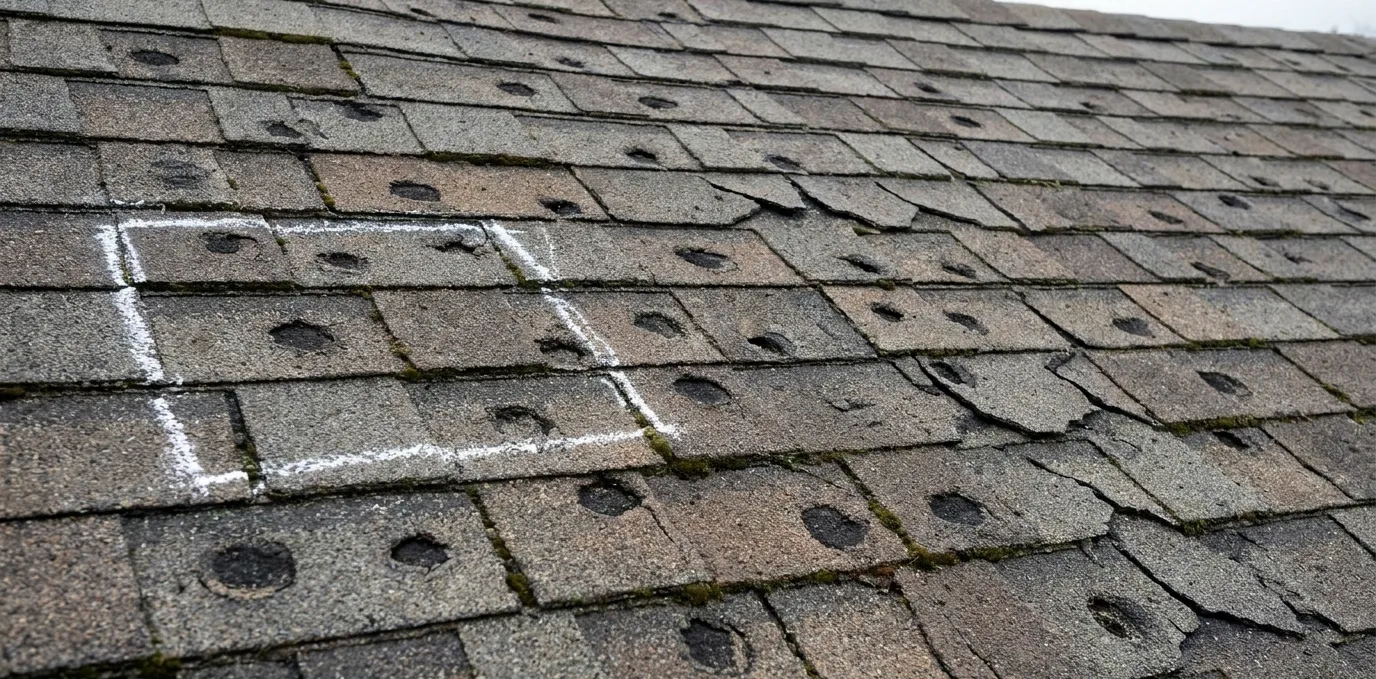
Visible Indicators After Hail Events
- Circular dents appear on shingle surfaces after storms
- Granule loss creates bare spots on upper roof slopes
- Soft spots develop along eaves where water pools
- Cracked sealant shows around pipe boots and vents
- Debris collects in gutters mixed with shingle fragments
How Hail Impacts Roofing Materials
Hail stones fracture the protective coating on asphalt shingles and compress the underlying fiberglass mat. This bruising reduces the shingle ability to shed water and creates entry points for wind-driven rain. Over multiple storms the fractures widen, allowing ice to form beneath the surface during freeze cycles.
Technicians measure the diameter and density of impact marks to determine whether repair or replacement is required for each area. They also lift surrounding tabs to inspect the underlayment for moisture stains that indicate prior water travel. This step reveals damage that remains invisible from above.
Inspection Steps Performed by Technicians
Our technicians begin at the ridge and work downward in a grid pattern, recording every impact mark and noting its size. They check both slopes and valleys because hail often concentrates along wind-driven paths. Flashing joints receive special attention since metal bends under impact and loses its seal.
Measurements include counting damaged shingles per square and marking soft decking areas with chalk. Technicians photograph each elevation and note the direction of prevailing winds during the storm. These records guide the selection of matching replacement materials and the extent of any section repairs.
Repair and Replacement Choices
Small clusters of bruised shingles can be replaced individually when the surrounding field remains intact. Technicians remove the damaged pieces, install new underlayment patches if needed, and weave replacement shingles into the existing courses. This approach limits disruption while restoring surface integrity.
Larger affected zones require removal of multiple courses. Technicians install new shingles that match the existing color and profile, then reseal all exposed nail heads. In cases where underlayment shows widespread saturation, full section replacement becomes necessary to eliminate ongoing moisture paths.
Materials Used and Initial Homeowner Steps
Replacement shingles are selected to match the existing weight and granule color so the repair blends with untouched areas. High-quality sealants are applied at overlaps and around penetrations to restore the original water-shedding surface. Technicians also replace any bent step flashing that hail has deformed.
Homeowners should photograph all visible marks from the ground and note the date of the storm. Placing tarps over confirmed interior leaks can limit further interior damage until technicians arrive, provided access remains safe. Avoid walking on the roof surface because additional pressure can enlarge existing fractures.
Hail Damage Roof Repair questions
How soon after a storm should hail damage be checked?
Technicians recommend inspection within two weeks because repeated rain can drive water deeper into bruised areas. Early assessment allows accurate mapping of impact density before additional weathering occurs.
Can damaged shingles be repaired without full replacement?
Isolated bruises can be replaced individually when the surrounding field shows no further impacts. Technicians confirm the underlayment remains dry before installing matching shingles and resealing all joints.
What areas do technicians examine beyond visible dents?
They lift tabs to inspect underlayment for moisture trails, check flashing deformation, and measure granule loss in gutters. These steps locate hidden water paths that develop after initial hail contact.
How are replacement shingles matched to the existing roof?
Technicians select shingles by weight class and granule color from the same manufacturer line. They also verify tab size and seal strip placement so the repair maintains consistent wind resistance.
Schedule Hail Damage Roof Repair
Contact Grand Island Roofing Solutions to have technicians assess hail impacts and complete precise repairs across the USA.