
Shingle Repair in the USA
Grand Island Roofing Solutions repairs damaged asphalt shingles after storms move through the USA. Our technicians examine each tab for cracks in the fiberglass mat, loss of ceramic granules and lifted edges that allow water past the underlayment. They measure exposure lengths on remaining shingles to match new pieces exactly so the repair blends with the existing field.
Technicians also check fastener patterns around vents and valleys where wind often pulls nails loose. They document granule piles in gutters as an early sign of hail impact and trace water stains on decking from above. These steps help isolate the entry points before any patching begins. Before arrival seal interior leaks temporarily then let Grand Island Roofing Solutions finish shingle repair in USA regions.
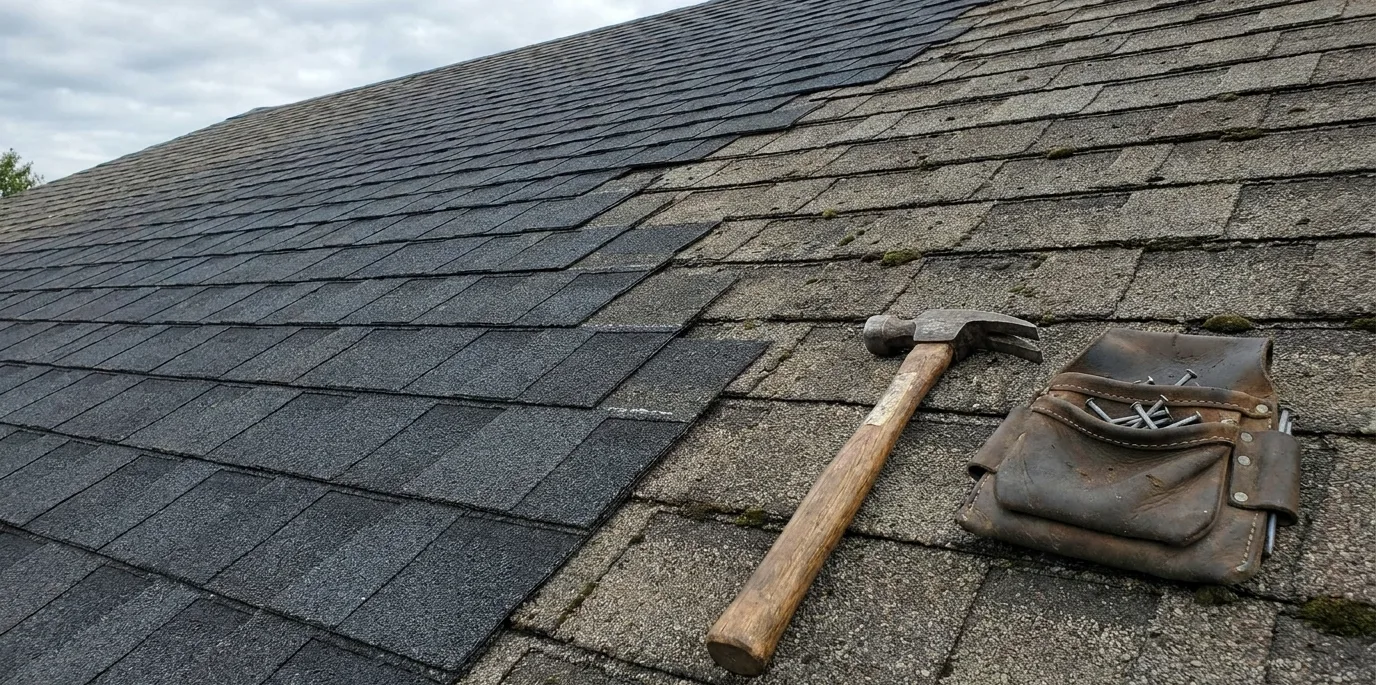
Visible Indicators of Shingle Damage
- Dark spots or granule piles collecting in gutters after wind or hail.
- Tabs curled upward along the leading edge from repeated wind pressure.
- Cracks or splits running across the middle of individual shingles.
- Nail heads visible where shingles have pulled away from the deck.
- Soft or discolored areas on the ceiling directly below roof slopes.
Common Causes of Shingle Failure
Hail strikes fracture the fiberglass reinforcing mat inside each shingle even when the surface coating stays intact. Over time those fractures let water wick upward and rot the decking beneath. Wind gusts crease shingles along the butt edge and pry sealant strips loose so the next rain drives under the layer.
Repeated thermal expansion loosens nails and creates small gaps that widen during storms. Debris carried by high winds can also slice through the surface coating and expose the mat to UV degradation. Each of these conditions requires a targeted replacement of only the affected tabs rather than a full overlay.
What Technicians Measure During Inspection
Our technicians lift the course above a damaged tab to verify the number of layers present and the condition of the felt or synthetic underlayment. They measure the remaining exposure of adjacent shingles to confirm new pieces will align with the existing course lines. They also record the shingle manufacturer and color code so replacement bundles match the weathering pattern already on the roof.
Technicians probe nail heads to determine whether they are still holding or have backed out. They trace water stains on the underside of the decking to locate the exact entry point and note any soft spots that indicate rot. These measurements determine whether a single tab swap or a larger section replacement is required.
Repair and Replacement Options
When only a few tabs show bruising or creasing, technicians remove the damaged pieces and slide new shingles into the existing courses. They drive fresh nails in the manufacturer recommended locations and apply sealant tabs at the leading edge. This method preserves the surrounding field and maintains the roof slope drainage pattern.
If multiple adjacent shingles have lost granules or lifted repeatedly, a larger section is cut out and new underlayment is installed before the replacement shingles are laid. The new course is stepped into the old field so water flows over the seams without interruption. All cut edges receive a bead of compatible sealant to prevent wind driven rain from entering.
Materials and Homeowner First Steps
Grand Island Roofing Solutions carries standard three tab and architectural shingles in common colors along with matching ridge cap and step flashing. Technicians also keep synthetic underlayment and ice and water membrane on hand for valley and eave repairs. All fasteners are corrosion resistant ring shank nails sized for the deck thickness.
Homeowners should photograph every visible tab from the ground and note the date and time of the storm. If a leak appears, they can place a bucket on the floor and move furniture away from the stain while avoiding any attempt to climb the roof. These records help our technicians locate the damaged area quickly once they arrive.
Shingle Repair questions
How do technicians match replacement shingles to an older roof?
They record the manufacturer name printed on the shingle edge, note the color code and measure the exact exposure of the existing course. New shingles are selected from the same product line so granule size and weathering match the surrounding field.
What causes shingles to lift after a wind event?
Strong gusts break the factory sealant strip along the leading edge. Once that bond fails, the tab flexes repeatedly and the nail holes enlarge, allowing the shingle to pull free during the next storm.
Can a single damaged tab be replaced without disturbing the rest of the roof?
Yes. Technicians lift the course above the damaged tab, slide the old piece out and insert a new shingle cut to the correct exposure. Fresh nails are driven through the new tab and sealed so the surrounding shingles remain untouched.
What should a homeowner check after hail passes through?
Look for small dents on metal vents and downspouts, then examine gutters for fresh piles of ceramic granules. These signs indicate impact energy reached the roof surface and further inspection of the shingle mat is needed.
Schedule Shingle Repair
Contact Grand Island Roofing Solutions to assess storm damaged shingles and restore weather protection across the USA.