
Gutter Repair in the USA
Grand Island Roofing Solutions handles Gutter Repair after storms by addressing dents from hail, creases from wind driven debris and separations at joints that let water bypass the intended path. Our technicians measure existing slope, check fastener spacing and examine how debris has altered flow capacity. Proper function keeps water away from fascia boards and foundation edges where repeated saturation leads to rot or settling. After any weather event the first step is documenting visible dents or sags with photos from ground level while avoiding ladder use on wet surfaces.
When gutters no longer carry water cleanly, roof edge leaks often appear first at valley terminations and rake boards. We evaluate whether cleaning, section replacement or full line installation restores the original drainage line without altering roof overhangs. Each inspection records the gauge of the existing metal, the condition of hangers and the distance between downspout outlets. These measurements guide whether a localized splice will suffice or whether the entire run requires new material matched to the roof slope. Grand Island Roofing Solutions examines underlayment condition after high winds when doing gutter repair for USA properties.
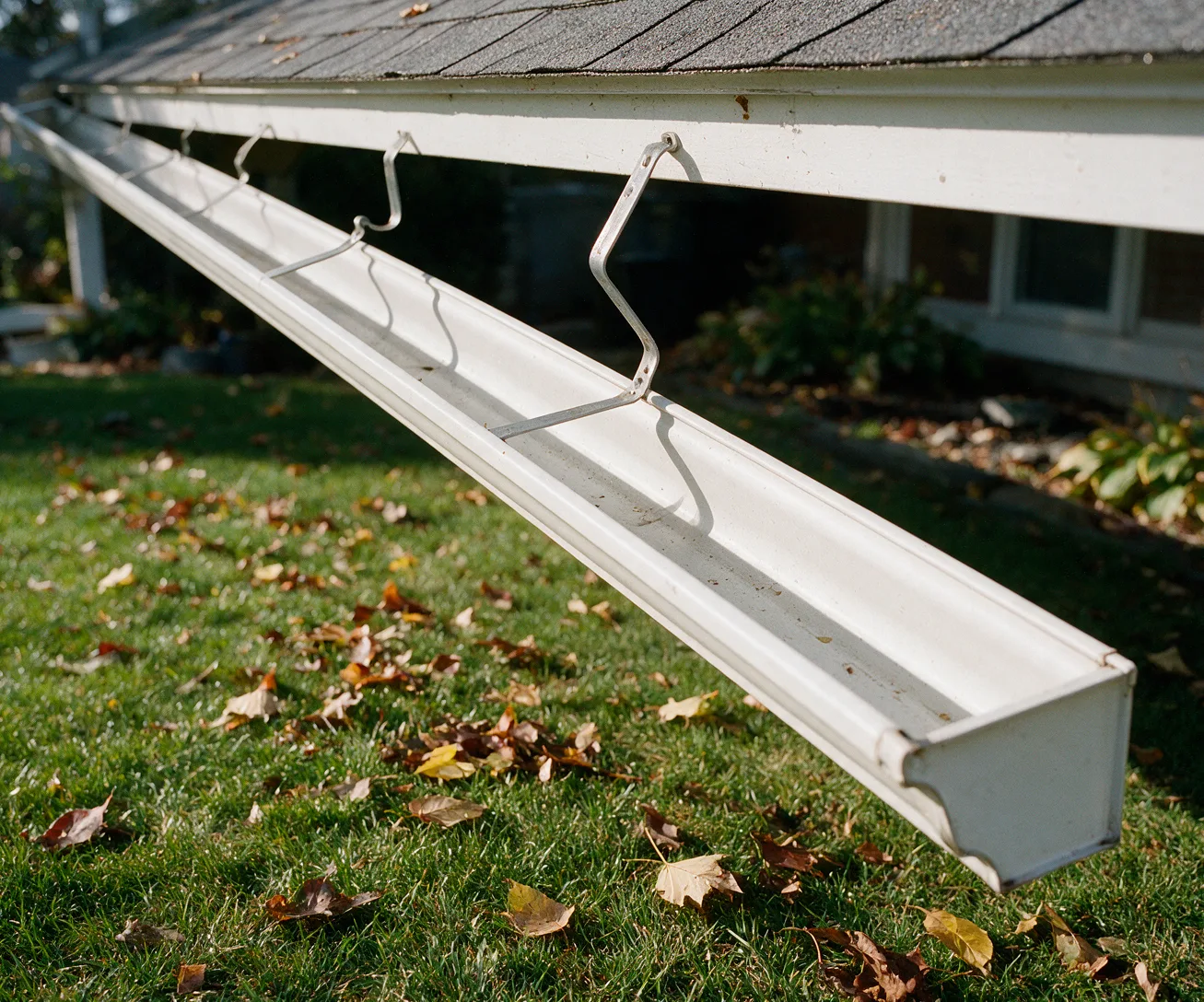
Warning Signs of Gutter Problems
- Water spills over the front edge during moderate rain instead of entering the trough.
- Rust streaks or white oxidation appear along seams where fasteners have loosened.
- Downspouts pull away from the wall leaving gaps that allow splash back onto siding.
- Hail dents create low spots where standing water remains after rainfall ends.
- fascia boards show dark staining directly below gutter joints indicating overflow.
How Storms Damage Gutters
Hail strikes leave circular bruises that reduce the interior cross section and create points where water slows and backs up. Wind driven branches crease the metal at mid span, changing the designed slope so water pools instead of moving toward outlets. These physical changes often occur together, and the combined effect concentrates flow at weakened seams until they separate. Our technicians trace the path of each crease to determine whether a single panel can be replaced or whether the distortion has traveled into adjacent sections.
Repeated freeze thaw cycles after initial storm damage widen small openings at miters and end caps. Once water enters these gaps it travels behind the gutter back into the fascia, accelerating decay. Documenting the location of every visible dent and crease before calling for service helps the crew plan material lengths and splice locations in advance.
Inspection Points Our Technicians Measure
Slope is checked at multiple points along each run using a four foot level to confirm a minimum quarter inch drop per foot toward the nearest outlet. Hanger spacing is counted and recorded, noting any fasteners that have pulled out of the rafter tails. Downspout drop locations are mapped relative to the roof valleys so new outlets can be placed where concentrated roof runoff enters the gutter. These measurements determine whether existing outlets are adequate or whether additional drops must be added during repair.
Metal thickness is gauged at undamaged areas to match replacement stock and avoid mixing incompatible materials that corrode at contact points. Joint condition is tested by applying light pressure to each seam while observing movement. Any joint that flexes more than one sixteenth of an inch usually requires a new section rather than sealant alone.
Repair Versus Full Line Replacement
Isolated hail dents can be removed with body spoons and the panel reinforced from behind with new hangers. When creases run the full length of a section or multiple seams have opened, that length is cut out and a new piece is spliced using manufacturer approved connectors that maintain the original profile. Full line replacement becomes necessary when the gutter has lost more than thirty percent of its slope or when the fascia itself requires repair before new hangers can be secured.
In either case the crew removes the old fasteners completely rather than leaving stubs that create future leak points. New silicone bronze screws are used at every hanger to resist corrosion in coastal or de icing salt environments. After installation the line is flushed with water to verify that all water exits the final downspout without backup at any joint.
Materials and Parts Used
Five inch K style aluminum in 0.032 inch thickness is the most common replacement stock because it matches the majority of existing residential profiles. Where heavier loads from frequent hail are expected, 0.040 inch aluminum or 24 gauge steel is substituted. End caps, miters and drop outlets are formed from the same gauge to keep expansion rates consistent across temperature swings. All new components receive a baked on finish that matches common gutter colors so the repair blends with the existing roof edge.
Hangers are upgraded to hidden fascia brackets spaced no more than twenty four inches on center. These brackets support the outer lip as well as the back wall, reducing the chance of wind lift in future storms. Downspout elbows and extensions are secured with two screws per connection to prevent separation during heavy flow.
Gutter Repair questions
Can a single dent be fixed without replacing the whole gutter?
Small hail bruises that have not altered slope can be dressed out from inside the trough and reinforced with an additional hanger. When the dent has created a low spot that holds water or the surrounding metal has stretched, the affected length is removed and replaced with a new section spliced at the nearest intact joint.
How does wind affect gutter seams?
High winds push debris against the outer face, creasing the metal and loosening fasteners at the same time. Once a seam opens, wind driven rain enters the joint and travels behind the gutter, staining the fascia. Replacement sections are installed with new hidden brackets that secure both the front and back walls against future movement.
What should be checked after a hail storm?
Walk the perimeter at ground level and note every circular dent, any sagging runs and water stains on siding below the gutter line. Photograph each location before contacting Grand Island Roofing Solutions so the crew can bring matching material lengths and plan splice points in advance.
Do gutters need new outlets after storm damage?
When existing downspouts are too far apart or have been crushed, additional outlets are added at valley terminations to handle concentrated roof flow. The new drops are located so water enters the gutter where it already has momentum, reducing the chance of overflow at the next heavy rain.
Schedule Gutter Repair
Contact Grand Island Roofing Solutions to document storm dents and restore proper drainage before water reaches interior spaces.