
Roof Replacement in the USA
Storms deliver hail that bruises shingles until the granules loosen and the mat cracks. Once cracks allow water past the underlayment, repeated leaks damage decking and insulation. Grand Island Roofing Solutions technicians measure the extent of bruised areas and check for delamination before recommending replacement over patch repairs.
Wind events crease shingles along the leading edges and tear them from fasteners. When creasing affects more than one course across multiple slopes, the roof loses its ability to shed water at overlaps. Our crews document the pattern of lifted and missing shingles along with any exposed felt before planning a full tear-off and new installation. Our crews at Grand Island Roofing Solutions replace damaged sections during roof replacement jobs covering the USA.
Warning Signs That Point to Replacement
- Granules from shingles collect in gutters after each rain
- Multiple leaks appear in different rooms during the same storm
- Shingles curl or buckle along the same slope lines
- Daylight shows through decking in the attic after high winds
- Flashing around chimneys or valleys has pulled away from the surface
Storm Causes That Require Full Replacement
Hail stones larger than three-quarters of an inch fracture the fiberglass mat inside asphalt shingles. Once the mat cracks, water travels under the remaining surface and reaches the decking. Technicians count the number of fractures per square and note how many squares show this damage before deciding replacement is required.
Sustained wind gusts lift shingle tabs and fold them back, breaking the sealant strips. When sealant failure occurs across entire roof planes, the underlayment becomes exposed to UV and further wind. Grand Island Roofing Solutions measures the percentage of lifted tabs and checks for nail withdrawal at the upper corners of each shingle.
What Technicians Inspect and Measure
Crew members walk every slope and probe decking with a screwdriver to locate soft spots caused by long-term water entry. They also lift a sample of shingles to inspect the condition of felt paper and the spacing of existing nails. These measurements determine whether the decking can stay or needs partial replacement during the new install.
Flashing details at valleys, walls, and penetrations are examined for corrosion or improper overlaps. Technicians record the length of each valley and the type of step flashing present so the new system can maintain the same drainage paths. Any fascia boards showing rot from overflow are noted for homeowner coordination before work begins.
Replacement Options and Sequence
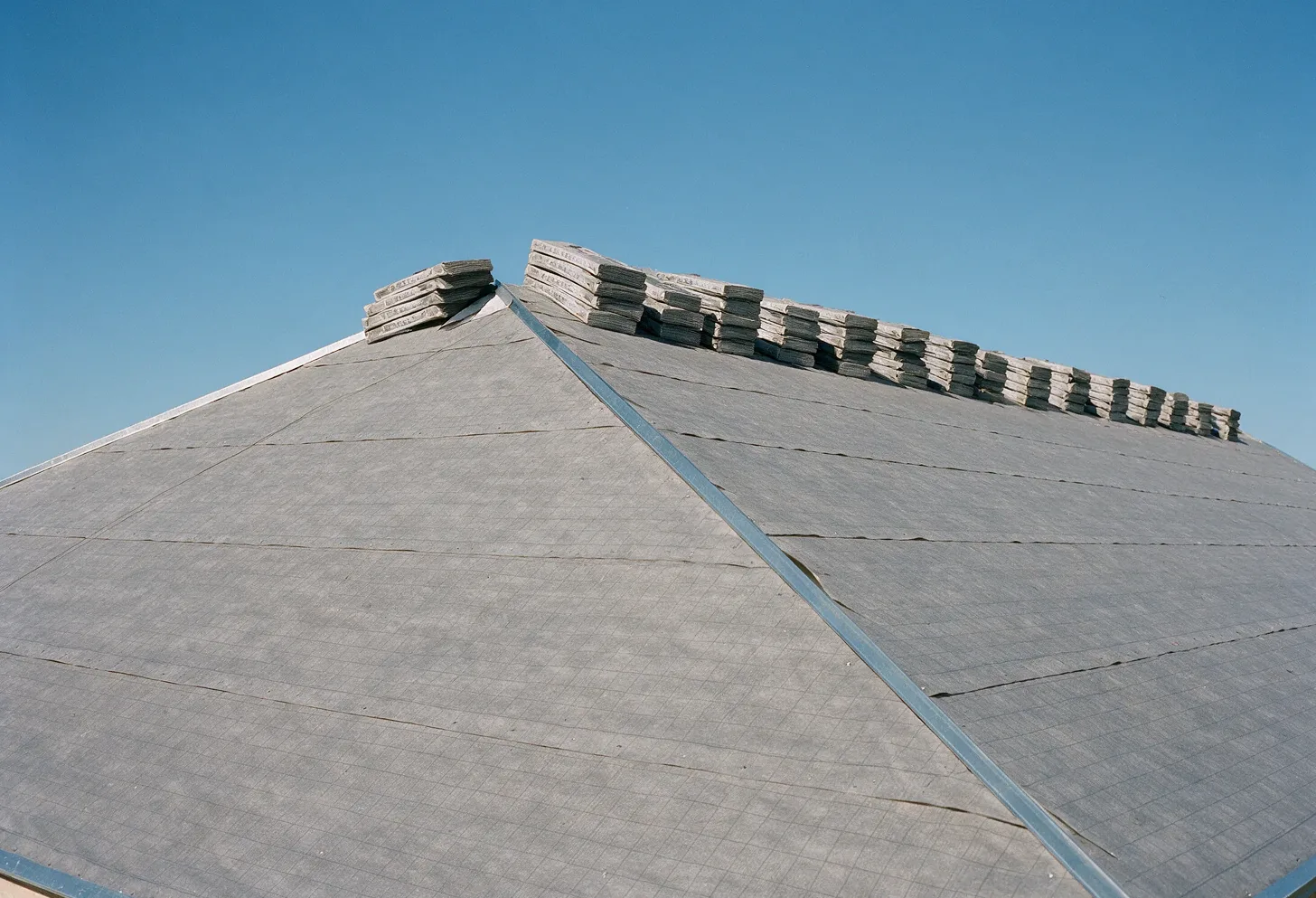
A complete tear-off removes all existing layers down to the decking so the new underlayment lies flat. Synthetic underlayment is rolled out first, followed by starter strips at eaves and rakes. Shingles are installed in courses with proper offset to maintain the intended nailing zone over the previous course.
Ridge vent is added or replaced when attic ventilation calculations show the existing vent is undersized for the roof area. Drip edge is installed along all eaves and rakes before shingles reach the perimeter. Grand Island Roofing Solutions technicians check each course for straightness and correct exposure before moving to the next slope.
Materials and Parts Used in the Install
Architectural shingles with a minimum 10-inch reveal provide the new surface. Self-adhered ice and water shield is applied along eaves and in valleys to block wind-driven rain from reaching the decking. Color-matched ridge cap shingles finish the hips and ridges after the field shingles are installed.
Galvanized or stainless-steel step flashing is cut to length and woven into each course at walls. Pipe boots with molded bases and stainless clamps seal around plumbing vents. All these components are selected to match the roof pitch and expected wind exposure for the property.
Roof Replacement questions
How do I know if my roof needs replacement instead of repair?
Count the number of damaged squares visible from the ground. When leaks appear in more than two separate locations or when hail fractures exceed twenty per square, technicians usually recommend replacement because patching will not restore the water-shedding ability across the remaining surface.
What should a homeowner do first after noticing storm damage?
Take dated photographs of missing and bruised shingles from the ground and inside the attic. Place buckets under active leaks and move stored items away from water stains. Avoid climbing onto the roof until Grand Island Roofing Solutions can assess the decking condition safely.
Which parts of the roof are replaced during a full job?
All shingles, underlayment, and flashing are removed down to the decking. Ridge vent, drip edge, and pipe boots are replaced at the same time. Existing insulation is left in place unless water staining shows it must be removed to allow proper drying before the new layers are installed.
How long does a typical roof replacement take?
A crew removes the old materials and installs the new system in stages that keep the structure covered each night. The sequence begins at the eaves, moves upslope, and finishes with ridge details. Weather and roof complexity determine how many days are needed to complete every slope.
Schedule Roof Replacement
Grand Island Roofing Solutions technicians measure storm damage and outline the replacement sequence for your roof.