
Wind Damage Roof Repair in the USA
Wind Damage Roof Repair addresses roofs where sustained gusts have creased shingles along their lower edges or torn them free at fasteners. Our technicians trace how air pressure lifts underlayment and allows water to travel beneath the surface layers. They map every affected slope before selecting fasteners or replacement pieces that match the existing deck.
Debris carried by high winds can dent metal flashings or crack ridge caps, creating new paths for rain. Grand Island Roofing Solutions crews measure the extent of granule loss along creases and check whether the synthetic underlayment remains intact beneath displaced shingles. Repairs focus on re-securing the field while preserving original ventilation paths. Homeowners can safely clear debris prior to Grand Island Roofing Solutions completing wind damage roof repair in the USA.
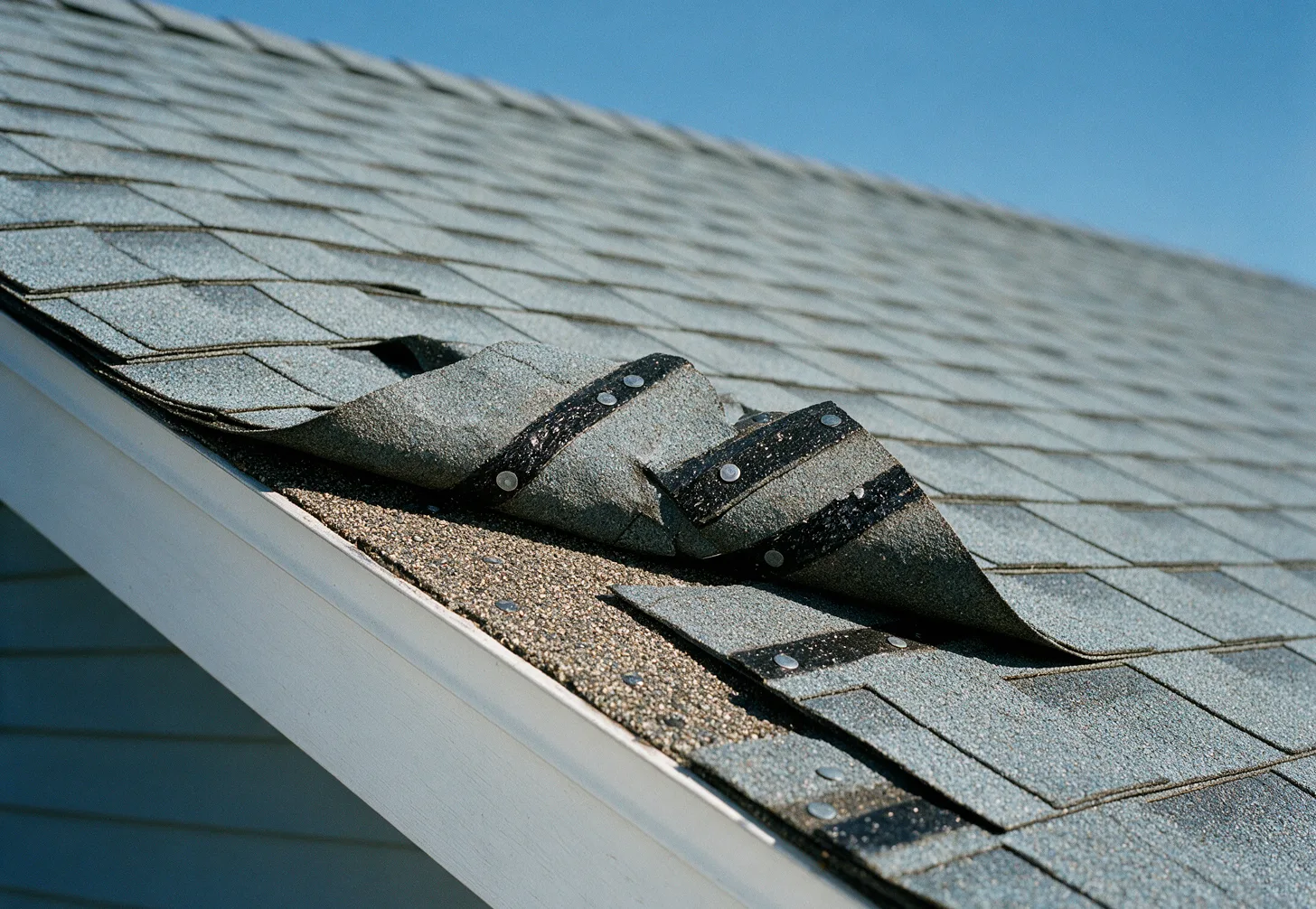
Visible Indicators of Wind Damage
- Shingles creased horizontally near the butt edge
- Missing or lifted tabs exposing underlayment
- Granule trails running down slopes after storms
- Dented step flashing along walls or chimneys
- Ridge cap sections rotated or pulled loose
How Wind Creates Roof Openings
Strong winds force air beneath shingle edges, bending the material until the fiberglass mat fractures along a straight line. Once creased, the tab no longer sheds water correctly and begins to channel moisture toward nail penetrations. Technicians look for these parallel creases first because they mark the most common starting point for leaks.
Turbulence around eaves and rakes can also loosen drip edge, allowing wind-driven rain to reach the deck. Our technicians measure the gap between loosened metal and the fascia to decide whether re-nailing or full replacement of the edge is required. They note any sealant beads that have pulled away from the drip edge as well.
Inspection Steps Our Technicians Follow
Technicians begin at the ridge and work downward, checking each course for uplift by gently pressing the shingle tabs. They measure how far any tab rises above the course below and record the number of compromised fasteners per square. Infrared readings help locate damp insulation beneath lifted sections without removing material.
Flashings receive separate attention: counter flashings are probed for movement and step flashings are checked for sealant failure at overlaps. Any ridge vent that has shifted is examined for torn nail holes in the deck. All findings are documented on a slope-by-slope diagram before repair options are discussed.
Repair and Replacement Choices
When only a few tabs are creased, technicians replace the damaged shingles and add extra fasteners at the manufacturer's recommended locations. For widespread creasing across multiple courses, they remove the affected field and reinstall matching shingles while checking underlayment integrity at the same time.
Dented flashings are straightened where possible or swapped for new pieces cut to length on site. Ridge cap sections that have rotated are re-nailed with ring-shank fasteners and sealed at the overlaps. Synthetic underlayment tears receive patches that extend beyond the damage by at least six inches on all sides.
Immediate Steps Homeowners Can Take
After high winds pass, homeowners should photograph every slope from ground level and note the date and time. If water appears inside, placing towels or buckets beneath active drips protects interior finishes until arrival. Attic access allows visual checks for daylight through the deck without climbing onto the roof itself.
Avoid walking on creased shingles because additional weight can widen existing fractures. Downspouts should be cleared of any debris that might prevent water from leaving gutters. These simple actions give technicians clearer information once Grand Island Roofing Solutions arrives to begin Wind Damage Roof Repair.
Wind Damage Roof Repair questions
What wind speed usually causes shingle creasing?
Sustained winds above 50 mph commonly produce horizontal creases because air pressure lifts the shingle tabs and bends the mat past its flex limit. Technicians measure the angle of each crease to estimate the direction and strength of the gusts that struck the slope.
Can damaged underlayment be left in place during repair?
Torn or water-stained underlayment must be cut out and replaced because it no longer forms a continuous water-shedding layer. Our technicians remove only the minimum area needed and patch with matching synthetic material sealed at all edges.
How are lifted ridge caps secured again?
Ridge cap sections are lifted, the nail holes are inspected for deck damage, and new ring-shank nails are driven through the original holes when the wood remains sound. Sealant is applied under the overlap before the cap is pressed back into position.
Should homeowners remove loose shingles themselves?
Loose pieces should remain in place until technicians arrive because pulling them can expose underlayment to direct rain and create larger openings. Documenting their location with photos allows crews to account for every missing tab during the repair.
Wind Damage Roof Repair Assessment
Contact Grand Island Roofing Solutions to schedule a wind damage inspection across the USA.