
Roof Leak Repair in the USA
Our technicians trace roof leaks to hail impacts that fracture shingle surfaces and allow water past the underlayment or to wind gusts that lift edges and crease valleys where water pools. Once the entry path is identified the crew removes only the compromised sections rather than entire slopes.
Materials used include matching three tab or architectural shingles, self adhering underlayment strips along seams and new step flashing cut to fit existing wall intersections. All replaced fasteners are ring shank nails driven flush to avoid creating new puncture points. Grand Island Roofing Solutions checks for granule loss on impact areas while providing roof leak repair throughout the USA.
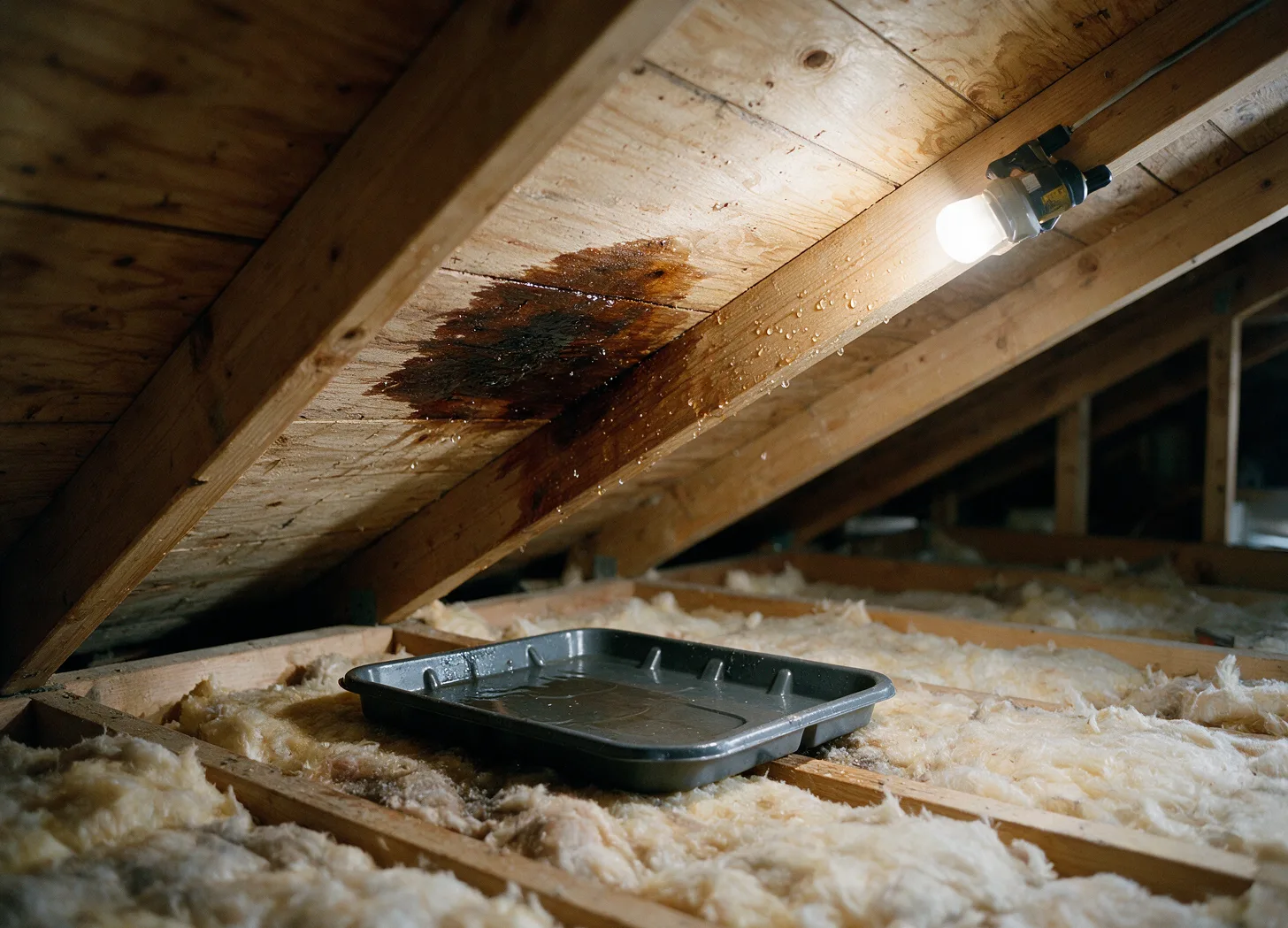
Visible Indicators of Active Leaks
- Dark streaks running down interior walls below ceiling joints
- Granule accumulation in gutters directly under suspected slope areas
- Soft or sagging drywall sections on upper floor ceilings
- Daylight visible through attic sheathing gaps after storms
- Musty odor near roof deck penetrations during humid periods
Storm Related Causes of Water Intrusion
Hail strikes create circular bruises that crack the asphalt coating and expose felt layers beneath the granules. Over repeated events these bruises widen into channels that direct water under adjacent shingles even when the surface appears intact from ground level. Wind events fold shingle corners upward along eaves and rakes creating gaps that funnel rain sideways under the course above.
Flashing around chimneys and vents often loosens when wind driven debris strikes the metal edges. Once displaced the step flashing allows water to run behind siding and into the attic space along rafters. Technicians measure the extent of granule loss around each bruise using a standard reference card to determine which shingles require full replacement versus sealant touch up.
Technician Inspection and Measurement Steps
Technicians begin at the ridge and work downslope checking each course for creases that indicate prior wind uplift. They use a moisture meter on sheathing exposed through removed shingles to record readings above twenty percent before deciding on additional underlayment layers. Flashings are probed with a flat bar to test for hidden corrosion at nail lines.
Valleys receive extra attention because accumulated debris masks splits in the metal. Each suspected leak path is marked with chalk and photographed from inside the attic to correlate with exterior damage before any material is removed. This mapping prevents unnecessary tear off while ensuring all entry points receive new sealant or shingle replacement.
Repair and Replacement Options
When bruises are isolated the damaged shingle is lifted and cut out then replaced with a new piece slid under the course above and nailed in the same pattern. For wind creased areas along edges the crew installs a wider starter strip that extends farther onto the deck to restore the original overlap dimension.
Larger sections around penetrations receive new self adhering membrane extending six inches past the original flashing footprint before new shingles are layered back into place. All new components match the existing shingle profile and color so the repair blends without visible lines from street level.
Initial Homeowner Actions Before Arrival
Place shallow pans or buckets under visible interior drips to collect water and prevent spread to adjacent flooring. Photograph the ceiling stains and any attic moisture marks with timestamps for documentation. Avoid walking on the roof or attempting temporary patches from ladders because added weight can widen existing creases.
Note the approximate direction of wind during the most recent storm and which slope faces that exposure. This information helps technicians prioritize their slope inspection once on site. Keep attic access clear so moisture readings can be taken without moving stored items.
Roof Leak Repair questions
How do technicians locate the exact leak source?
They start from the ridge and follow chalk marked paths downward while cross referencing interior moisture meter readings. Each bruise and crease is probed to confirm water passage before any shingle is lifted.
What materials replace hail bruised shingles?
Matching architectural shingles are installed with new ring shank nails and a six inch wide strip of self adhering underlayment beneath the repair zone to restore the original water shedding layer.
Can leaks be stopped without full slope replacement?
Yes when damage is confined to isolated bruises and lifted edges the crew replaces only affected courses and reseals flashings leaving the remaining roof untouched.
What should be documented before technicians arrive?
Photograph interior stains with timestamps and note wind direction from the most recent storm. Keep attic access clear for moisture meter checks.
Schedule Roof Leak Repair
Contact Grand Island Roofing Solutions to inspect storm caused leaks and restore roof integrity across the USA.